guide · Updated 2026-09-01
Electric Forklift Buying Guide for Southeast Asian Businesses (2026)
Everything you need before buying an electric forklift in Southeast Asia: types explained, electric vs diesel compared honestly, how to pick capacity and battery, certifications, total cost of ownership, and how to import from China safely.
Why Electric Is Now the Default Choice in Southeast Asia
If you're buying a 1 to 3 ton forklift for indoor warehouse work in Malaysia, Vietnam, Indonesia or Thailand today, you're probably going to end up with electric. Not because of government mandates or green incentives (though those exist in some markets) — but because three practical facts have made diesel the odd choice for this duty class:
One: electricity costs a fraction of diesel per shift in every market we supply. The fuel-cost saving alone covers a meaningful portion of the truck's purchase price over a year of daily use.
Two: zero exhaust means no fumes in your warehouse, no contamination risk for food-grade operations, no ventilation cost, and staff who don't go home with headaches from breathing diesel exhaust all day.
Three: lithium batteries removed the old limitation that confined electric trucks to single-shift work. Opportunity charging during breaks now lets one battery cover two or three shifts — more on that below.
A **small electric forklift** isn't the right tool for every job. But for warehouse, distribution center, loading dock and light industrial indoor work across Southeast Asia, it's become the standard answer for good reasons.
Electric vs Diesel: An Honest Comparison (Not a Sales Pitch)
Diesel still wins in specific scenarios. We sell electric forklifts and we'll tell you exactly when not to buy one from us:
- Diesel is better for: continuous heavy outdoor work on rough unpaved ground, all-day yard operations where refueling in two minutes matters, and situations where no charging infrastructure exists at all.
- Electric wins on: indoor air quality (zero exhaust), noise levels (your pickers will thank you), per-shift running cost (electricity vs diesel isn't close), maintenance simplicity (no engine = fewer service items), and total cost of ownership over several years for warehouse-duty cycles.
- The gray zone: mixed indoor/outdoor operations where the truck works both in the warehouse and on a concrete yard. Most compact electrics handle light outdoor duty fine — dock work, container devanning, short yard moves. Heavy continuous outdoor work pushes back toward diesel.
Types of Electric Forklift: Which One Is Actually Right for You?
'Electric forklift' covers several machine classes. Here's what each one does, so you don't end up shopping in the wrong category:
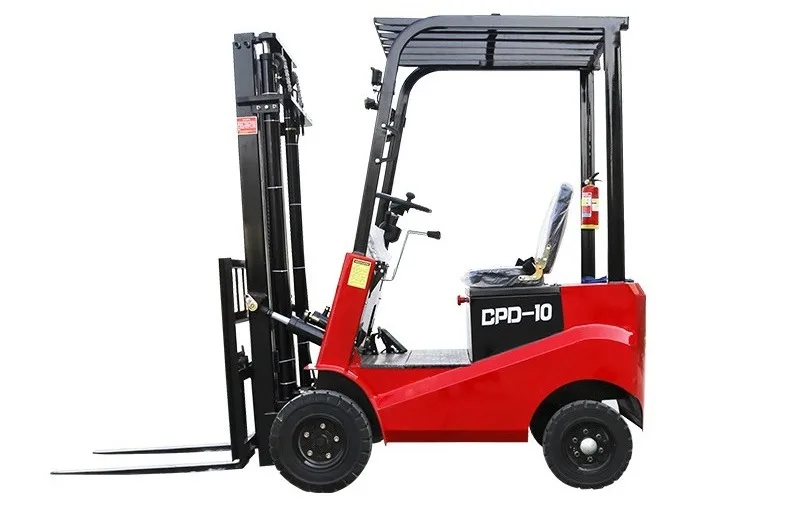
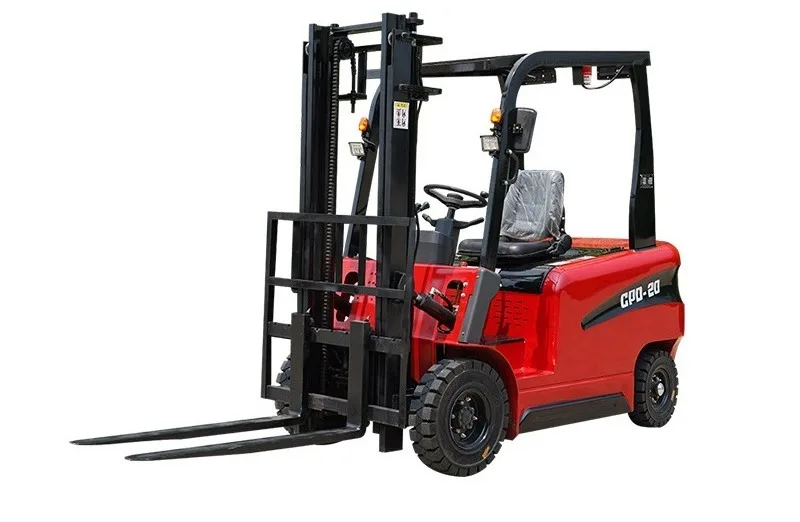
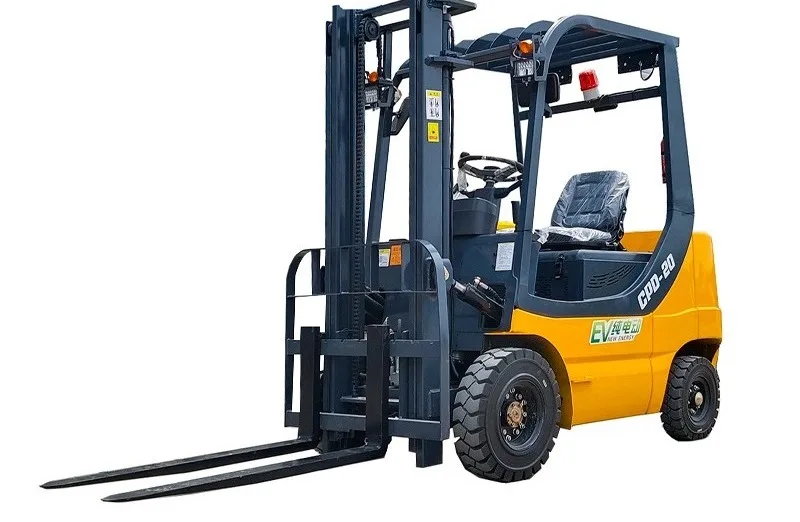
- Four-wheel counterbalance electric forklift (1–3.5 tons): the general-purpose warehouse truck. Lifts pallets to racking height, loads/unloads trucks, works indoors and on smooth yards. This is the class we supply and what most buyers mean when they say 'forklift.'
- Three-wheel counterbalance electric: tighter turning circle, less stable on uneven floors. Useful if your aisles are genuinely narrow (under 3 meters). Less common in Southeast Asia's SME market than in Europe.
- Reach truck: specialized for very narrow aisles (under ~2.8 m) and high racking (6+ meters). More expensive, less versatile outdoors. Only buy this if your layout actually requires it — many buyers don't need it.
- Electric pallet truck / stacker: walk-behind or platform machine for floor-level moves and low lifts up to about 1.6 meters. Cheaper, but can't stack to racking height or unload containers. Different tool entirely — useful alongside a forklift, not instead of one.
- Order picker: specialized for piece-picking from racking. Outside most SME needs unless you run a dedicated pick operation at scale.
Capacity Planning: The Math That Prevents Expensive Mistakes
Pick capacity by your heaviest regular pallet with 20–30% margin. Not your average pallet. The heaviest one that shows up on a normal week. If that number is 900 kg, buy 1.5 ton capacity minimum. If it's 1,400 kg, start looking at 2 ton models.
Two things that reduce effective capacity and catch buyers off-guard: lift height (rated capacity drops as the mast rises — a 2-ton truck lifts less at 4-meter height than at floor level) and load center distance (longer loads exert more leverage; if your pallets overhang the forks, tell the supplier the actual load center). Both get checked during quotation when you send your top beam height and pallet dimensions.
Most Southeast Asian warehouses we supply settle in the 1 to 2.5 ton band. E-commerce and FMCG often fit happily at 1–1.5 tons. Beverages, building materials and general cargo push toward 2–2.5 tons.
Batteries: Lead-Acid vs Lithium, Decided by Your Actual Operation
This is the decision where most buyers either overspend (buying lithium they don't need) or underspec (buying lead-acid that can't cover their shifts). Let your operation decide:
- Lead-acid fits: single-shift operations (8 hours or less per day), tight upfront budget, overnight charging available, temperate or well-ventilated warehouses. Cheaper to buy, proven technology, simple charging routine.
- Lithium fits: two or more shifts per day, hot warehouse environments (tropical temperatures accelerate lead-acid wear), no space or budget for a battery swap room, opportunity charging needed during breaks. Higher upfront cost but pays back through multi-shift coverage, longer cycle life and minimal maintenance.
- Unsure? Quote both configurations and compare total cost of ownership over your expected service life. Our lithium vs lead-acid comparison walks through the full trade-off with numbers.
Certifications: What You Actually Need Before Ordering
Certification requirements vary by country and by workplace type. Food-grade operations face stricter requirements than general warehousing. Retailer audits (if you supply to supermarkets or retail chains) may specify equipment standards that affect which configuration you can buy.
The rule: confirm certification needs before ordering, flag them in your RFQ, and make sure the supplier builds them into the quotation. Discovering after delivery that your truck lacks a required certification is an expensive surprise. We match configurations to the certifications your market requires — tell us yours upfront.
Total Cost of Ownership: What Actually Matters Over the Truck's Life
Purchase price is roughly half the story. To understand what a **small electric forklift** really costs over its working life, add these up:
- Battery replacement cycle: lead-acid typically needs replacement sooner than lithium; lithium delivers more cycle life per battery pack.
- Energy cost: electricity per shift versus diesel per shift — electric wins decisively here in every SEA market.
- Maintenance: electric has fewer service items (no engine system) but batteries and contactors are the main consumables. Order the wearing-parts kit with the truck.
- Downtime cost: what one day of lost forklift time costs your operation in delayed orders, idle labor, or missed delivery windows. This hidden cost often exceeds the purchase-price difference between a reliable truck and a cheap one.
Buying From China: How to Do It Without Getting Burned
Importing a **small electric forklift** from China is a normal, well-established process that thousands of Southeast Asian businesses do every year. It's also where first-time buyers make avoidable mistakes. Here's the short version of doing it right:
- Verify the specification sheet in writing before paying — capacity, battery, mast, dimensions, included items (charger? spare parts? manual?). A lower headline price often excludes things the other quote includes.
- Use platform-protected payment or third-party pre-shipment inspection for first orders. Once you've built a relationship with a supplier, T/T deposit with balance before shipment is standard practice.
- Confirm warranty terms in writing: what's covered, what's excluded, who pays shipping on warranty parts, response-time commitment.
- Plan for sea freight (LCL for single units), import duty (varies by country — check HS 8427 with your broker), inland delivery from port to your site, and operator training.
- Start with one unit. Prove it in operation. Then scale. Our import guide covers the full step-by-step process including customs, Incoterms and delivery logistics.