guide · Updated 2026-09-07
Small Electric Forklift for Factory: How to Pick the Right One for Your Production Floor
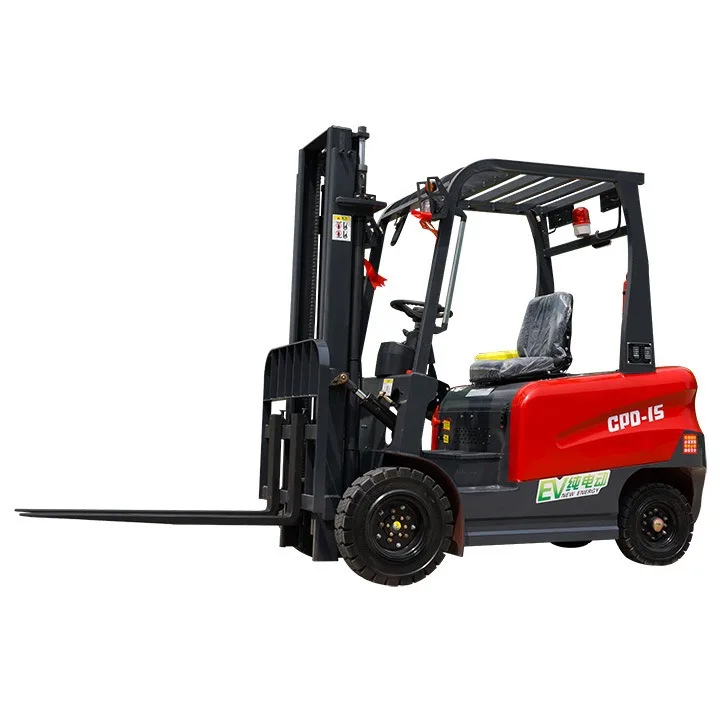
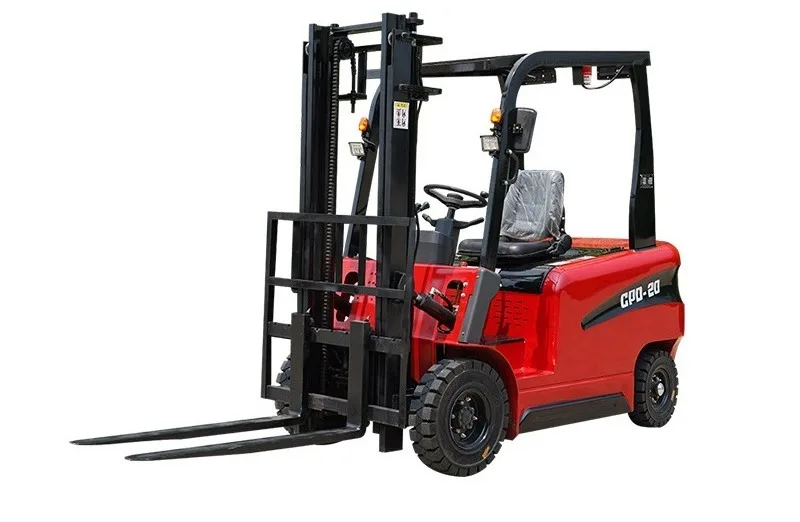
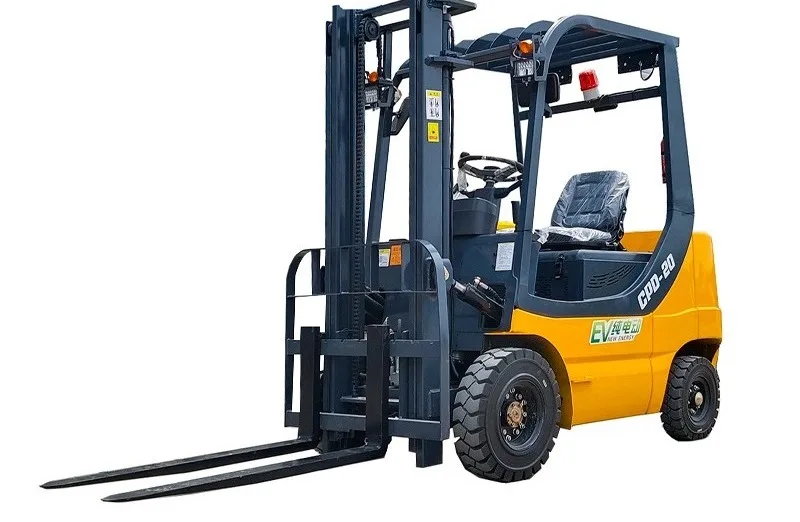
Factory work is harder on a forklift than warehouse work — heavier loads, ramps, mixed surfaces, longer shifts. Here is how to match a **small electric forklift** to your production floor: capacity by factory type, the floor and ramp checks most buyers skip, battery choice for one shift versus two, and when an electric truck is simply the wrong tool.
What Makes Factory Work Harder on a Forklift
A warehouse mostly moves the same pallets along the same paths. A factory does not. Raw materials come in heavy and awkward — sacks of resin, bundles of steel, drums, cartons of components — and finished goods leave on different pallet sizes, at different weights, on a schedule set by the production line rather than by the forklift.
There is also the surface problem. Many small factories in Southeast Asia run a mixed route: smooth concrete on the production floor, a ramp or dock plate down to the yard, maybe an open-sided shed in between. The truck you pick has to handle all of it, loaded, several times a day.
A **small electric forklift** handles this workload well within its capacity band — most factory material moving sits between 1.5 and 3 tons — and it brings one advantage that matters more indoors than people expect: zero exhaust. No fumes drifting across the production line, no diesel smell in finished goods, no idling engine noise two meters from where your staff work all day.
Matching Capacity to What Your Factory Actually Moves
The most common sizing mistake we see is buying for the rare heavy load instead of the everyday one. Sizing by your regular daily weight is cheaper and safer — a truck stressed at its limit every shift breaks sooner and stops sooner. A rough guide by factory type:
- **Light assembly and electronics:** components, sub-assemblies, packed cartons — usually under 800 kg. A 1 or 1.5 ton model covers it with margin to spare.
- **General manufacturing:** bagged materials, boxed finished goods, mixed pallets in the 1 to 2 ton range. A 2 or 2.5 ton model is the workhorse pick here.
- **Heavy raw materials:** polymer bales, metal stock, building components pushing past 2.5 tons regularly. Look at the 3 or 3.5 ton class before stepping up to full-size diesel territory.
Floors, Ramps and Dock Plates: The Checks That Get Skipped
Every factory buyer checks lifting capacity. Far fewer check the ground the truck travels — and that is where a workable purchase goes wrong. The classic failure is a truck that climbs the yard ramp empty without effort but slows to a crawl carrying a 2-ton load, because gradeability loaded was never confirmed.
If your factory has a ramp steeper than about 5 percent, or dock plates with a visible angle break, say so in the RFQ with the approximate gradient. We confirm the model can hold speed loaded before you commit, not after the truck arrives. The same goes for floor condition: expansion joints, patched concrete, debris from cutting and grinding — all of it changes the tire and ground clearance conversation.
One more detail worth ten seconds with a tape measure: the lowest overhead clearance along the route. Door headers, pipe runs, mezzanine edges. A lowered mast that clears everything beats a taller mast you have to baby through the plant every day.
One Shift or Two: How Your Schedule Picks the Battery
For a single-shift factory, a lead-acid battery is usually the honest answer. It charges overnight, it costs less, and for intermittent use — the truck sitting while production runs, then called into action — a single charge lasts days.
The calculus flips when production does not stop. Two shifts, working through lunch, or a hot climate that punishes a hard-worked battery — that is where lithium earns its premium through opportunity charging: top-up during breaks, no battery swap, no dedicated charging room eating floor space. Most of the multi-shift factory inquiries we handle in Malaysia, Vietnam and Indonesia end up on lithium for exactly this reason.
Exact working time per charge depends on your duty cycle — how far the truck travels and how high it lifts per hour — so it gets confirmed during quotation rather than guessed from a brochure number.
Replacing a Diesel Truck on the Factory Floor
A lot of factory buyers arrive at electric after years of running an old diesel truck indoors. The reasons are rarely abstract: fumes settling under a low roof, fuel stored next to finished goods, an operator shouting over engine noise. An electric counterbalance truck does the same pallet work with none of that — and it is usually the operators who adapt fastest, because the controls are simpler and the truck is far less tiring over a full shift.
Two practical things to sort out first. Where does the charger go, and does your factory power supply support it — a standard socket on a dedicated circuit is enough for most small trucks, but worth confirming with your electrician before the truck ships. And set the charging routine with your team on day one; an electric truck that gets parked without plugging in is the most common self-inflicted downtime we hear about.
When a Small Electric Forklift Is Not the Answer for a Factory
Being straight about the limits saves everyone money. A **small electric forklift** is the wrong tool if your operation looks like this:
- Continuous handling of loads beyond 3.5 tons — steel coil transfer, heavy machinery moving. That is full-size diesel territory.
- Rough, unpaved yards or muddy ground between buildings. Solid-tire electric trucks need smooth surfaces; rough terrain eats them.
- Aisles under 2.8 meters with racking above 5 meters. You want a reach truck, not a counterbalance truck.
- Around-the-clock operation with charging windows under 15 minutes. Even lithium cannot beat physics — diesel or LPG remains the honest answer there.
Six Numbers That Get You a Factory-Fit Quote
If you are comparing options for your factory, skip the generic "price for a forklift?" inquiry. Send these six details and we come back with a specific model, mast and battery recommendation you can act on:
- Heaviest pallet or load you move on a normal day
- Top lift height you need — racking beam, stacking height or truck bed
- Narrowest aisle, doorway or passage on the route
- Any ramp or dock plate, with the approximate gradient
- Shifts per day, and whether the truck works through breaks
- Floor conditions: indoor only, or mixed indoor-outdoor with yard work