guide · Updated 2026-09-01
Small Electric Forklift for Warehouse Operations: A Practical Guide
How to pick the right small electric forklift for your warehouse: the four numbers that decide everything, battery choice by shift pattern, aisle fit checks, and why most Southeast Asian warehouses have already gone electric.
Why Warehouses in Southeast Asia Are Going Electric (It's Not What You Think)
No grand philosophy here. Diesel fumes in an enclosed warehouse make staff headaches a regular thing and leave a thin film of soot on carton tops. Electric trucks don't do that. They also cost a fraction of what diesel costs per shift to run — electricity versus diesel fuel is not even close in most Southeast Asian markets right now — and they're quiet enough that warehouse pickers can actually hear each other talk.
That's the real reason most new warehouse forklifts bought across Malaysia, Vietnam, Indonesia and Thailand in the 1 to 3 ton class are electric now. Not green marketing. Boring operational math.
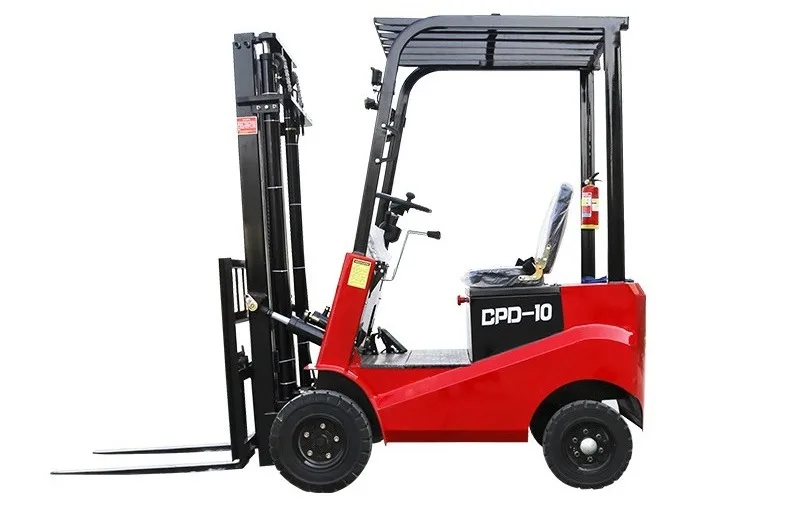
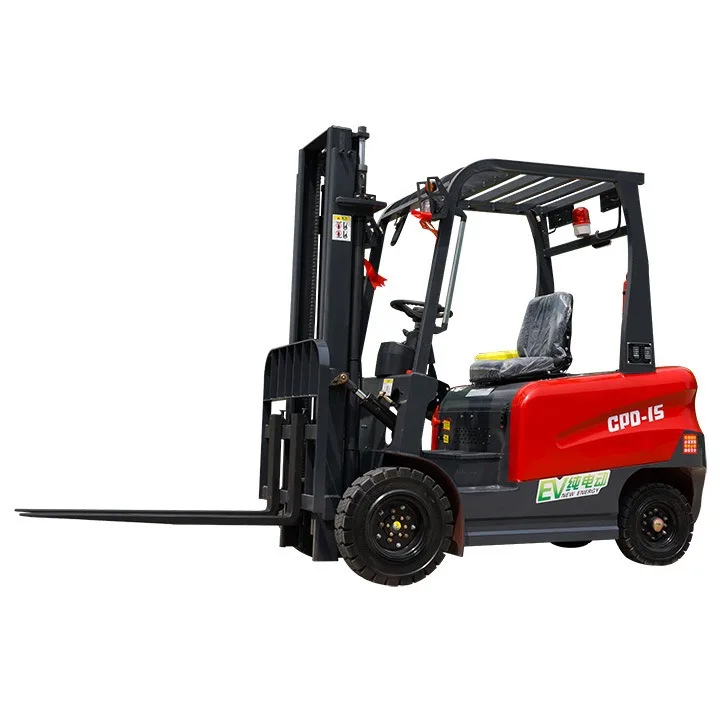
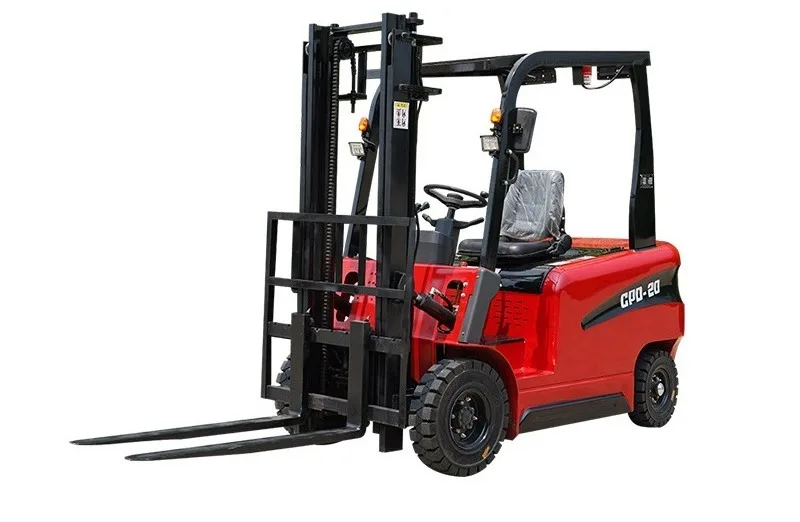
A **small electric forklift** for warehouse duty covers the daily core: unloading inbound containers or trucks, moving pallets from receiving to racking, replenishing pick faces, loading outbound. If that list matches your operation, you're shopping in the right machine class.
The Four Numbers That Decide Your Truck (Write These Down)
Before you look at a single model photo, before you ask about price, write down four numbers. Every good forklift recommendation comes from these four numbers. Every expensive mistake comes from skipping one:
- Heaviest regular pallet weight — not your average, not your typical, the heaviest one that shows up on a normal week
- Top racking beam height — the forks need to clear this with room for the pallet above it
- Clear aisle width between rack faces — measured with a tape, not estimated by eye
- Shifts per day the truck will work — one shift changes everything about battery choice
Capacity: Buy for Your Heaviest Day, Not Your Average Day
Most warehouses we supply in Southeast Asia end up running 1 to 2 ton **small electric forklifts**. The capacity decision is straightforward once you're honest about your loads: weigh your heaviest regular pallet, add 20–30% margin, and match to that.
E-commerce and FMCG cartons often sit happily on 1 to 1.5 tons — these are light pallets and buyers in this space sometimes overspend on capacity they never use. Beverages and building materials are another story; a pallet of bottled water or ceramic tiles pushes well past a ton and you'll want 2 tons or more headroom.
The catch everyone learns eventually: rated capacity drops as the mast goes up. A truck rated for 2 tons at floor level lifts less at your top beam height. This is why we ask for both your heaviest pallet weight AND your top beam height together in the RFQ — residual capacity gets checked as a pair during quotation, not as separate afterthoughts.
Aisles Decide Which Truck Fits. Not the Other Way Around.
Measure the clear width between rack faces before you start browsing models. As planning figures, compact electric counterbalance trucks work in aisles of roughly 3 to 4 meters with standard EUR or Asian pallets. The exact minimum for your situation is turning circle + pallet length + working clearance, verified per model during quotation.
Here's the hard line: if your aisles are under roughly 2.8 meters, a counterbalance truck — however 'compact' the brochure says it is — is the wrong tool. That's reach truck territory, a different (and more expensive) machine class. Our narrow aisle guide walks through the full calculation so you know which side of that line you're on.
One more thing: if you're renting your warehouse and can't change the racking layout, the aisle width you have is the aisle width you have. Make sure the truck fits it before anyone ships anything.
Battery: Let Your Shift Pattern Decide, Not Your Budget Instinct
Single shift with overnight charging? Lead-acid does the job and keeps the purchase price lower. Simple charging routine, proven technology, fine for most single-shift warehouse operations.
Two or more shifts? Lithium. Here's why: opportunity charging during meal breaks and shift handovers means one lithium battery can cover two or three shifts without a battery swap room, without a second battery, and without the eight-hour charge-and-cool cycle that limits lead-acid to one shift per day. For a warehouse that's trying to get more hours out of fewer trucks, this is usually the deciding factor.
Heat matters too. We've seen lead-acid batteries wear noticeably faster in uncooled warehouses in Penang, Jakarta and Ho Chi Minh City where daytime temperatures stay high year-round. Lithium packs with proper battery management systems handle sustained heat better in daily cycling. Runtime per charge depends on configuration and is confirmed during quotation — our lithium vs lead-acid comparison runs the full trade-off if you want the detailed version.
One Truck or Two? The Question Nobody Asks Early Enough
Here's something we see repeatedly: a growing warehouse buys one **small electric forklift**, uses it hard for eighteen months, reaches the point where any downtime hurts, and then wishes they'd ordered the second unit six months earlier.
Two smaller trucks beat one big truck in most growing operations. You get backup when one needs service or parts, two docks worked simultaneously, and lower cost per truck. Many of our buyers start with one unit, prove it in daily operation for a few months, then add the second. Starting with one is completely normal — the minimum order quantity is confirmed during quotation, and many first-time buyers begin with a single truck.
Send the Four Numbers, Get a Real Answer
That's the whole method. Heaviest pallet weight, top beam height, clear aisle width, shifts per day. Send those through the RFQ form and you'll get back a specification-matched recommendation with reasoning attached — not a catalog dump, not a guess based on incomplete information — plus a firm quotation you can compare line by line against any other offer.