guide · Updated 2026-09-01
Buying Your First Forklift: A Small Business Guide to Mini Electric Forklifts
Outgrown the hand pallet jack? Here's what a mini electric forklift (800kg–1.5 ton) actually covers, what it doesn't, how much it really costs to own one, and why most small businesses in Southeast Asia are buying electric instead of diesel.
The Signs You've Outgrown the Pallet Jack (And They're Obvious)
Nobody buys a forklift because business is bad. You're reading this because some version of these things is happening:
A container arrived and you're paying two or three workers half a day to handball cartons off it because your pallet jack can't lift them. Or you're renting a forklift by the hour every time a delivery truck shows up and the rental cost is starting to look like a truck payment. Or your hand pallet jack just met a pallet it couldn't move — and something on either the pallet or the jack broke.
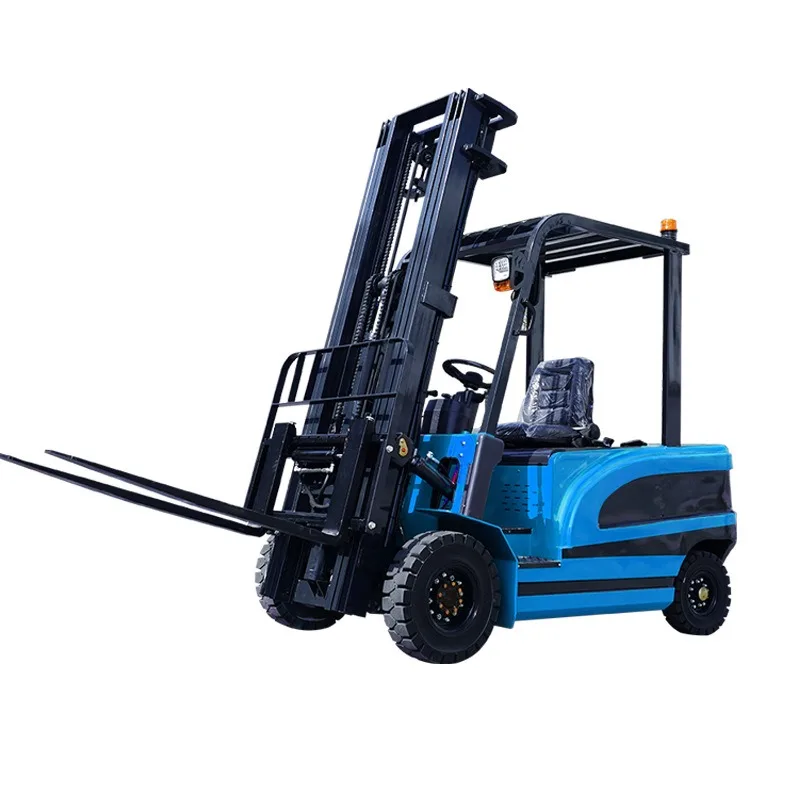
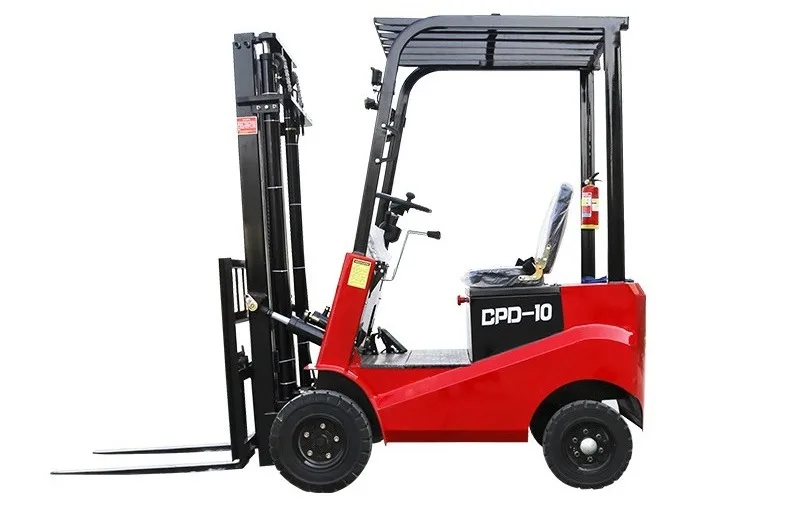
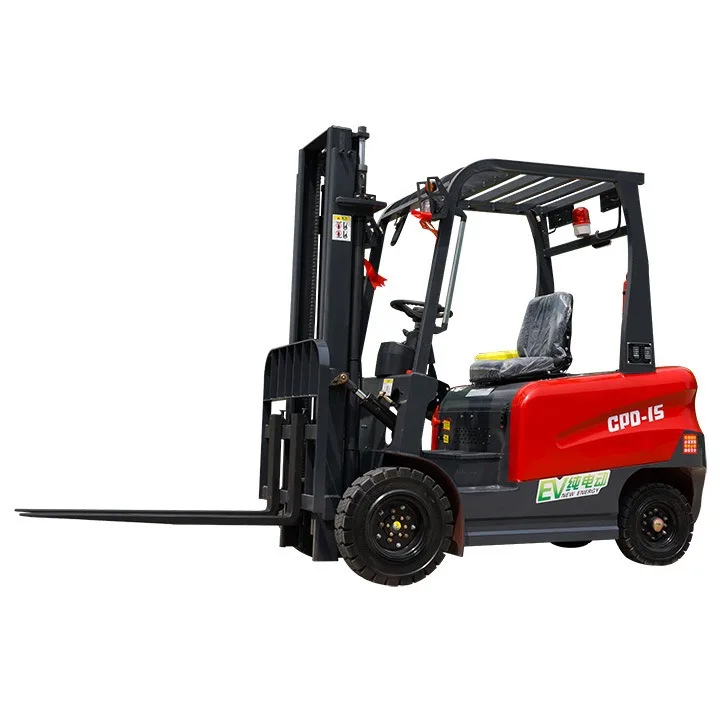
A **mini electric forklift** in the 800 kg to 1.5 ton range is usually the right first truck for exactly this situation. Not because it's the cheapest thing you can find, but because it matches what a small business actually lifts day-to-day, fits into the kind of spaces small businesses actually rent, and doesn't require a mechanic on staff to keep running.
What a Mini Electric Forklift Actually Covers (and What It Doesn't)
Be honest about your loads and the capacity question answers itself. If your heaviest regular pallet is under 1,000 kg — which is true for most e-commerce operations, apparel warehouses, light manufacturing, and general SME distribution — then a 1 ton or 1.5 ton **small electric forklift** covers you with comfortable margin.
That one truck does the container unloading, the put-away to racking, the inter-aisle shuttling, the occasional heavy item that two people shouldn't be lifting. All day, indoors or on a concrete yard, on a single charge (for single-shift operations).
What it won't do: stack reliably in aisles under roughly 3 meters wide, lift to 6-meter+ high racking, or spend all day on rough unpaved ground. If any of those is your daily reality, tell us in the RFQ — the answer might be a different configuration or mast option, not necessarily a bigger truck.
Three Things First-Time Buyers Overspend On (Don't)
First-time forklift buyers overspend in predictable ways. Here are the three most common, with the honest skip:
- Capacity 'for future growth.' A 3 ton truck because 'maybe someday we'll handle heavier loads' is a mistake if today's heaviest pallet is 600 kg. You pay more upfront, you get a wider truck that needs more aisle room, and you burn money on capacity you don't use every single day. Buy for now plus 20–30% sensible margin over your actual heaviest pallet. Upgrade later if you actually grow into it — trucks hold value better when they're correctly spec'd for their duty.
- Extra mast height you don't need yet. Taller masts cost more upfront and reduce residual capacity at height. Match the mast to your current racking, not to a hypothetical future layout you haven't built.
- Fancy attachments on day one. A sideshifter is genuinely useful and worth considering. Most other attachments — clamps, rotators, fork positioners — solve problems you don't have yet. Buy the base truck, learn what you actually need after a few months of operation, then add attachments. The supplier can always ship them later.
The Real Cost Question (Here's the Honest Answer)
We don't publish fixed prices because a **forklift price without a specification is meaningless** — the same nominal '1 ton electric forklift' varies significantly by battery type, mast height, charger, tire spec and documentation. Anyone giving you a single price without asking about your operation is either guessing or selling you a preset configuration that may not fit.
What we can tell you honestly: the 800 kg to 1.5 ton electric class is the lowest-cost entry point into owning a forklift. Electricity costs a fraction of diesel per shift. Importing one unit from China as LCL freight is a routine process — many of our buyers are first-time importers doing exactly this, and our import guide walks through each step including customs, Incoterms and delivery logistics.
Do this math: add up what you currently spend on hired forklifts, on manual unloading labor, on delayed deliveries because you couldn't move a pallet fast enough. Compare that against the total landed cost of owning a small electric forklift (truck + shipping + duty + battery charging cost). Most small-business buyers who run that comparison stop hesitating pretty quickly.
Keeping It Running Without a Maintenance Department
Small businesses don't have maintenance departments. That's fine — an **electric forklift** doesn't need one the way a diesel truck does. No engine oil changes, no fuel filter replacements, no exhaust system servicing. The main ongoing items are: battery care (charging routine), tires (eventual replacement), and wearing parts like contactors and filters.
Practical tip: order the starter spare-parts kit with the truck. Forks, tires, contactors, filters — having these on your shelf means a common replacement is a fifteen-minute job, not a two-week wait for parts to arrive from overseas. Ask about the kit when you request your quotation.
For battery choice on a first truck: lead-acid is usually the sensible call for single-shift small businesses. Cheaper upfront, simple overnight charging routine, proven technology. Lithium earns its premium when you run multiple shifts per day — most first-time buyers don't need that yet.
Start With One Truck. Then Decide if You Need Two.
Order one unit. Run it for a few months. Learn what your actual workload looks like, where the bottlenecks really are, and whether one truck covers it or you're regularly waiting for it to come free.
If the business keeps growing, the second-truck decision eighteen months from now will be based on real operational data, not on guesses made before you owned your first forklift. Many of our buyers follow exactly this path: start with one **mini electric forklift**, prove the concept, add a second unit once volume justifies it. Starting with one is completely normal and the minimum order quantity is confirmed during quotation.
Send your pallet weights, door heights, aisle width and a rough description of your daily workload through the RFQ form. You'll get back a specific recommendation matched to your actual situation — not a catalog dump, not a push toward the most expensive option.