guide · Updated 2026-09-03
The Small Electric Forklift Buying Guide We Wish We'd Had 8 Years Ago
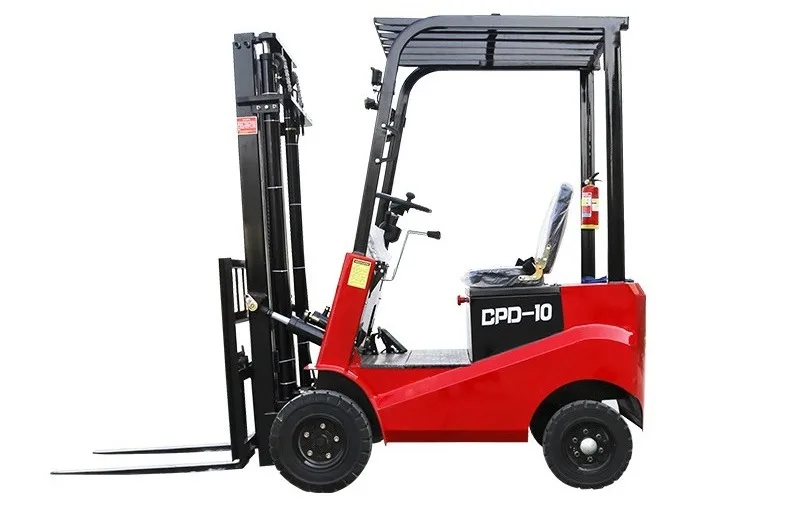
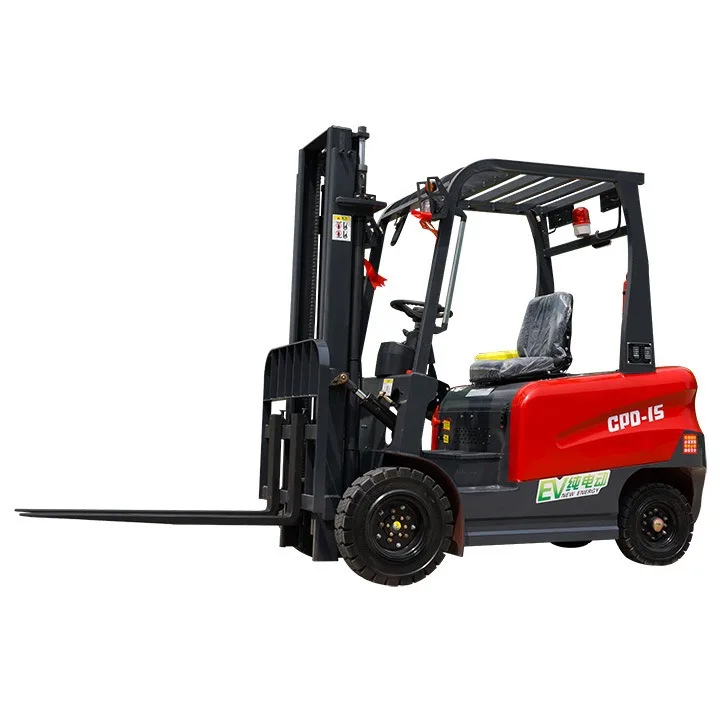
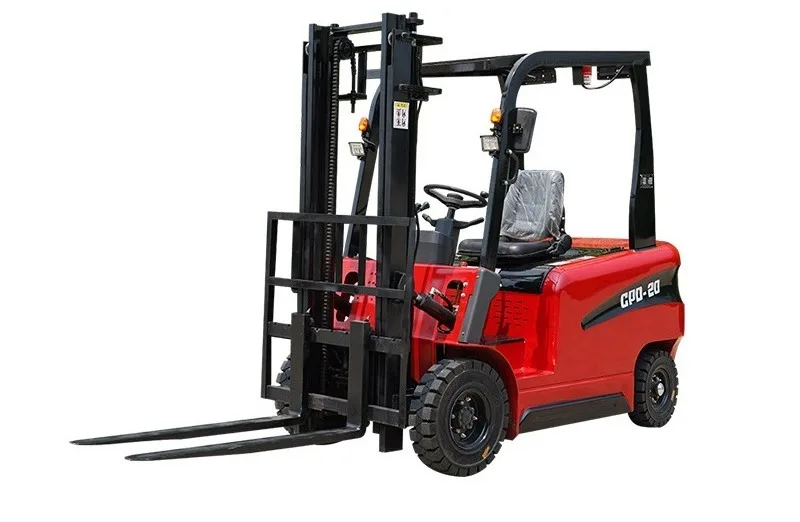
A practical, no-fluff buying guide for small electric forklifts - covering capacity, lift height, aisle math, lithium vs lead-acid, duty cycle and the four scenarios we see most across Southeast Asia (small warehouse, factory, 3PL dock, cold storage). Written by people who actually quote these trucks every week.
Why This Guide Exists
We quote **small electric forklifts** to buyers across Southeast Asia. Same questions, every week: what capacity, what lift height, lithium or lead-acid, will it fit my aisles, is the price fair, how do I get it to my country without surprises.
Most buying guides on the internet read like they were written by someone who has never actually bought a forklift. Lots of generic checklists, vague "consider your needs" advice, no numbers, no scenarios. We wanted to write one we would have wanted to read ourselves when we first started this business.
This is that guide. It is opinionated where it should be, careful with numbers where the numbers matter, and honest about the cases where a **small electric forklift** is the wrong tool entirely.
What a "Small Electric Forklift" Actually Means
Three things, in plain English:
**Capacity class.** Roughly 0.8 ton to 3.5 ton of rated lifting capacity. Above 3.5 ton you are in heavy industrial territory - different machines, different buyers, different price band.
**Power source.** Battery electric, either lead-acid or lithium. No diesel, no LPG, no petrol. Zero exhaust at the point of use, which is why these trucks are the default choice for any indoor work.
**Footprint.** Shorter, tighter-turning than a standard counterbalance truck. That last bit - the turning circle - is what makes a compact truck the right answer in the warehouses and docks we see across Malaysia, Vietnam, Indonesia, Thailand and the Philippines.
If those three things describe the truck you are shopping for, you are in the right guide.
Step 1: Capacity - Start With Your Heaviest Pallet, Not Your Average One
This is the single mistake we see most often. Someone buys based on what they usually lift, then discovers their occasional heavy load sits right at - or above - the truck's rated capacity.
Rule of thumb: take your heaviest regular pallet, add 20 to 30% margin, and buy to that number. If most of your pallets are 800 kg but you get a 1,300 kg load every week, you need a 1.5 ton **small electric forklift**, not a 1 ton. There is no prize for underspec'ing your truck.
A few less obvious things that change your effective capacity:
- Long or oddly shaped loads push the load center beyond the standard 500 mm - effective capacity drops fast. Tell us your actual load center in the RFQ.
- Higher lift heights reduce capacity. A 2-ton truck lifts less at 4 meters than at floor level. We confirm residual capacity at your working height during quotation.
- Attachments (rotators, paper roll clamps, side shifters) all change the math. Mention them in the RFQ, not later.
Step 2: Lift Height - Measure the Top Beam, Then Add Clearance
Take a tape to your top racking beam. Floor to beam, add 100 to 150 mm for the pallet and fork clearance - that is your minimum required lift height. Most **small electric forklifts** offer 3,000 mm as standard with options up to 4,500 mm or more depending on mast configuration.
Where people overspend: buying more mast than they need. A taller mast costs more upfront and reduces residual capacity at height. Match it to your warehouse, not to some hypothetical future racking you might install someday.
Also check the lowered mast height against your doorways, mezzanine edges and any low overheads along the route between dock and rack. A truck that cannot leave the dock because the mast does not fit under the door frame is an expensive lesson. Exact lowered mast height is confirmed during quotation - send us your door heights and we check it.
Step 3: Aisle Width - The Math That Catches Most Buyers
Turning circle decides whether your **small electric forklift** can actually work in your aisles. "Compact" is a marketing word. Turning circle is a number. Get the number.
Rough planning formula for right-angle stacking: turning circle + pallet length + about 300 mm working clearance = minimum aisle width. Send us your aisle measurement, pallet size and racking layout with the RFQ and we verify fit before quoting. This is the single check that prevents the most expensive mistake in forklift buying - a truck that physically cannot reach half your racks.
If your aisles are under about 2.8 meters, you are probably in reach truck territory rather than counterbalance territory. Different machine class, different conversation.
Step 4: Battery - It Boils Down to Your Shift Pattern
Single shift with overnight charging? Lead-acid works fine and saves money upfront. Two or more shifts? Lithium, because opportunity charging during breaks keeps one battery running all day without a battery swap room or a second battery.
There is a regional factor too. Across Malaysia, Indonesia, Thailand and Vietnam, warehouses run hot year-round. Sustained high ambient temperatures accelerate water loss in lead-acid batteries and shorten cycle life. Lithium packs with a proper BMS handle this better in daily operation. Working time per charge depends on configuration and duty cycle, confirmed during quotation.
Our default recommendation across the region: lithium if you run two shifts or any operation above 30°C ambient most of the year, lead-acid if you are single shift in an air-conditioned warehouse and want to save the upfront premium.
Step 5: Gradeability and Floor Conditions - Don't Skip This
If your operation includes ramps, dock plates, yard work or any gradient at all, loaded gradeability matters. A **small electric forklift** on a 5% ramp lifts less than its rated capacity - sometimes significantly less. Tell us your ramp gradient (or measure the dock plate angle) in the RFQ and we confirm the model handles it.
Floor type affects tire choice too. Solid rubber tires handle concrete and smooth factory floors well. If you have rough outdoor areas, unpaved yards or debris, flag it - there may be a tire option that fits better. This is confirmed during quotation.
Step 6: Parts, Warranty and Support - Ask Before You Pay
Three questions that seem boring until your truck is down:
- What wearing parts should I stock? Forks, tires, contactors, filters - order a starter kit with the truck and parts are on your shelf, not on a slow boat when you need them.
- What does warranty actually cover? Confirmed during quotation, but ask up front: who pays shipping on warranty parts, how long is the response commitment, what is the exclusions list.
- How do parts reach my country? Some suppliers ship parts faster than others. If you are in a secondary city in Vietnam or Indonesia, confirm logistics before you commit.
Step 7: Get the Spec Sheet in Writing Before Any Payment
Never buy from photos alone. Request the full specification sheet for the exact configuration quoted - capacity, lift height, battery type and voltage, mast type, dimensions, tire spec, charger included or not - and confirm every field that matters to your operation in writing before any payment.
A written spec sheet is also your reference if something arrives different from what was discussed. It takes ten minutes to review and saves months of disputes.
Scenario 1: Small Warehouse (500 to 3,000 sqm)
This is the most common buyer we see. A small warehouse, rented, with racking already in, aisles usually between 2.8 and 3.5 meters, indoor operation, single shift, often one forklift doing everything.
What we usually recommend: a 1 to 1.5 ton **small electric forklift**, lithium if there is any chance of a second shift, lead-acid if budget is tight and you will genuinely stay single shift. Compact body, tight turning, 3-meter standard mast with options for taller racking.
Common mistakes here: buying more capacity than needed because someone told you to "size up", then discovering the truck does not fit the aisles. Or buying a reach truck when a compact counterbalance would have done the job at half the cost.
Scenario 2: Factory and Small Manufacturing Floor
Factories move raw materials in and finished goods out, often across mixed indoor and outdoor areas with ramps and dock plates. Capacity matters more here than in a warehouse - production pallets, raw material, finished goods on pallets can easily hit 2 tons and beyond.
Our typical recommendation: 1.5 to 3 ton depending on heaviest regular load, lithium if the factory runs two shifts (which most do), solid tires for mixed indoor-outdoor work, confirmed gradeability for any ramps.
Watch out for: buying a forklift that cannot handle the gradient between yard and floor, or buying a single shift lead-acid truck for a factory that quietly grew into two shifts within the first year.
Scenario 3: E-commerce and 3PL Fulfillment
E-commerce and 3PL warehouses run on velocity. Inbound containers, putaway to high-density racking, replenishment, outbound loading - and around peak season (9.9, 11.11, year-end), the same trucks running two or three shifts a day. Uptime is the product you are actually selling to your own customers.
What we recommend here: 1.5 to 2 ton is the sweet spot for most e-commerce and 3PL buyers. Lithium batteries with opportunity charging are not optional at peak - they are the only way to survive the surge without renting a second forklift. Tight turning matters because the racking layout is dense.
Common pitfalls: underestimating peak-season load, buying a single-shift truck for an operation that actually runs two, or ignoring the ramp from the loading bay to the warehouse floor.
Scenario 4: Cold Storage and Food & Beverage
Cold rooms are hard on batteries and electronics. Every charge cycle in a freezer or chiller shortens battery life if the pack is not cold-spec configured. Food and beverage adds its own constraints: HACCP, retailer audits, hygiene rules that rule out any equipment that sheds particles, smoke or smell.
Our typical recommendation: 1.5 to 3 ton depending on your pallet weights, lithium with cold-spec configuration (battery heating, sealed connectors, anti-condensation treatment), stainless or galvanized fork option for washdown environments, food-grade tire if your auditor requires it.
The thing most buyers miss: standard batteries are not rated for sustained sub-zero operation. If you plan to run the truck into a freezer without a warm-up zone, you need to spec the cold package explicitly in the RFQ. Otherwise the battery warranty will not cover what you thought it covered.
What a Small Electric Forklift Actually Costs
Honest answer: it depends on capacity, lift height, battery and configuration. But rough bands so you can budget before the formal quote. Whatever the band, the more complete the RFQ you send us, the more accurate the quote. Things that change the price: battery choice, mast height, tire type, charger spec, country of destination (logistics), and any customizations.
- 1 ton compact, 3-meter mast, lead-acid: the entry band for the class - useful for budget planning, exact figure depends on configuration and shipping terms.
- 1.5 to 2 ton with lithium, 3 to 4.5-meter mast options: the most common configuration across our SEA buyers - quoted per spec.
- 3 ton with full lithium package and cold-spec options: the heavy end of the class, typically for factories, larger 3PL operations and cold storage.
Importing From China - The Honest Version
Most Southeast Asian buyers in this market are importing directly from a Chinese manufacturer. That cuts out a layer of margin but adds the question of how the truck actually gets from a factory in Shandong to your warehouse in Johor or Cavite. The two things that slow down imports more than anything else: incomplete RFQs that force back-and-forth, and last-minute spec changes after production has started. Get the spec right in writing before paying, and the import is boring in the best possible way.
- Production lead time: usually a few weeks for a standard configuration once the PO is confirmed.
- Shipping: sea freight to most SEA ports runs roughly 1 to 3 weeks depending on the route.
- Customs and clearance: your side, with the documents we provide (commercial invoice, packing list, bill of lading, certificate of origin if requested).
- Commissioning: the truck arrives crated and assembled; first-use commissioning is straightforward with the manual, or we can arrange remote guidance.
When a Small Electric Forklift Is the Wrong Tool
We promised honesty at the start, so here are the cases where you should not buy one. Everyone else - indoor warehouses, loading docks, factories, distribution centers, cold storage, e-commerce fulfillment, small businesses upgrading from hand pallet jacks - lands on a **small electric forklift** in this capacity class. If you are unsure which camp your operation falls into, send us four numbers in the RFQ - heaviest pallet weight, top beam height, aisle width, shifts per day - and we will tell you straight.
- You move 5-ton steel coils across a gravel yard all day. That is heavy outdoor industrial work - different machine class.
- You only shuttle pallets across a flat floor and never lift above knee height. Get an electric pallet jack. Cheaper, fits your actual job.
- Your aisles are under about 2.8 meters wide. You are in reach truck or very-narrow-aisle territory - different conversation.
- You run 24/7 with no charging window longer than 15 minutes. That is rare, but it exists, and it is diesel or LPG territory.
How to Get a Quote That Actually Helps You Decide
The fastest way to a useful quote is a complete RFQ. The four numbers we ask for - heaviest pallet weight, top racking beam height, narrowest aisle width, shifts per day - cover 80% of what we need to recommend a model with reasoning.
Useful extras if you have them: load center distance if your pallets are not standard, ramp gradient if you have dock plates, ambient temperature range if you are in cold storage, country and city for shipping, and any certification requirements.
Send that through the RFQ form on the site, and we come back with a recommendation, a configuration and a price band - usually within one working day. No catalog dumps, no guesswork.